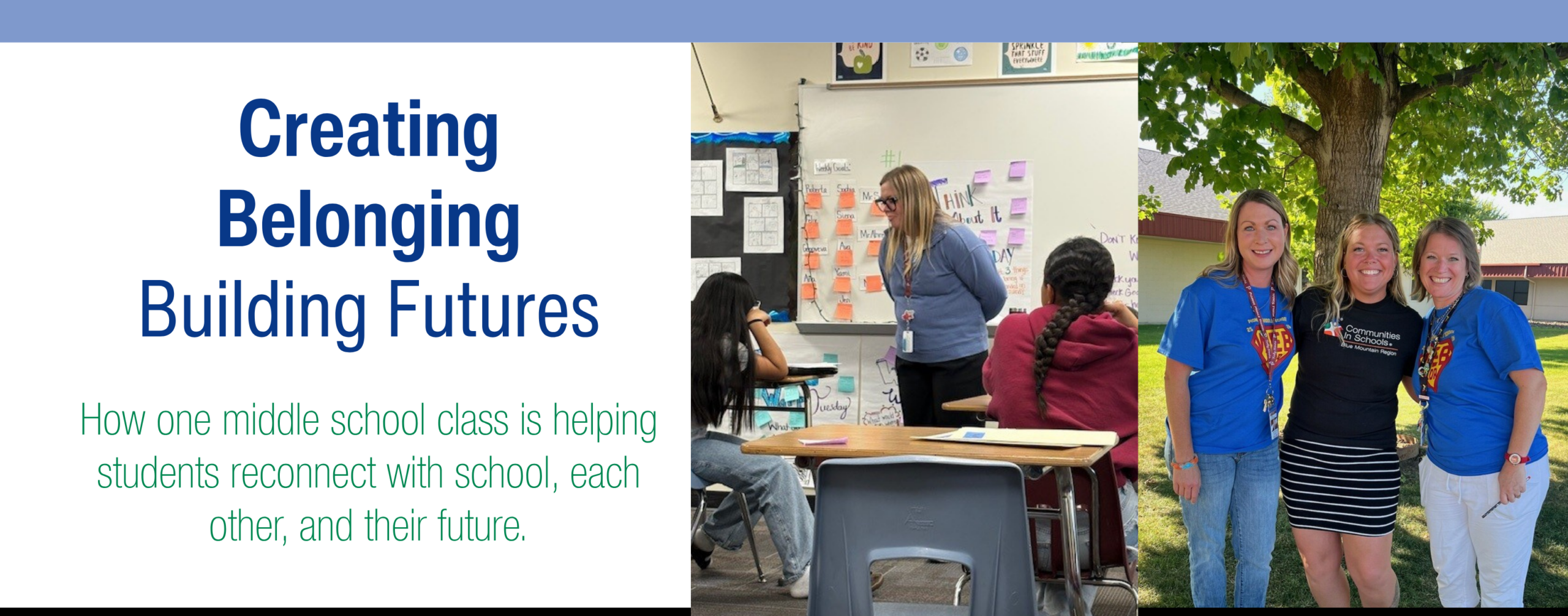
When students struggle with attendance, the challenges often extend beyond missed classroom time. Many students also experience a diminished sense of belonging, connection, and confidence at school. Across Communities In Schools of Blue Mountain Region, chronic absenteeism rates soar above the state average of 30%, underscoring the need for early, relationship-based interventions that help students re-engage with school. A partnership with Walla Walla Public Schools to address the challenge of chronic absenteeism means working together at all levels to find a solution.
At Pioneer Middle School, Student and Community Advocate Helen Freer recognized the connection between attendance and belonging and developed an innovative approach to help students re-engage with both school and their future.
Working closely with school and district leadership, Helen helped create a district-approved, credit-bearing class designed specifically to support students experiencing attendance challenges. What began in the fall as a pilot cohort of seven students has since expanded to 14 students in two sections, reflecting both the need for and success of the program.
Rather than focusing solely on attendance numbers, the class helps students build confidence, establish goals, and strengthen their connection to school. Students participate in individual and class goal setting, weekly journaling, and activities that encourage reflection, growth, and accountability. The results speak for themselves: one student, Sophia, attended just 33% of the school year before enrolling — by the following year, that number had climbed to 77%.
“This class helped students realize that they were worth being invested in, both by others and by themselves. Through this realization they began to believe that their futures were bright and that they could control the directions their lives would take.” – Helen Freer, CISBM Student and Community Advocate at Pioneer Middle School
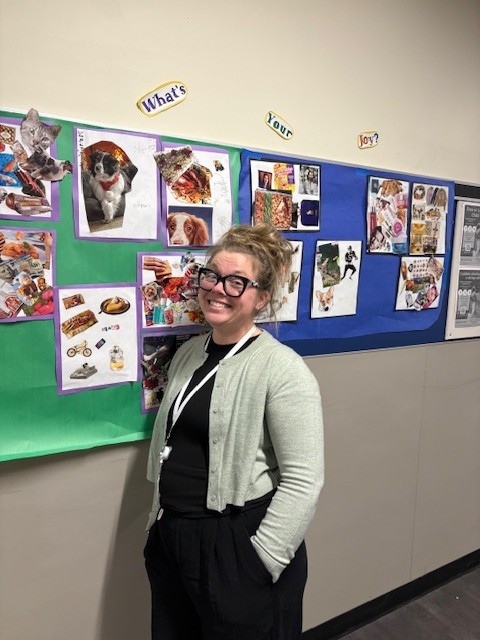
The class also emphasizes community engagement and helping students see themselves as contributors to something larger than themselves. Throughout the year, students have written letters to residents in senior living communities, participated in park cleanups, and engaged in projects that foster a sense of purpose and connection.
Recognizing that students need support both inside and outside the classroom, Helen also built in dedicated time for students to catch up on assignments and strengthen academic habits. For many participants, the class provides an opportunity to address barriers that may have previously prevented them from fully engaging in school. Students describe it simply: “No pressure. Fun projects. A space to come and breathe.”
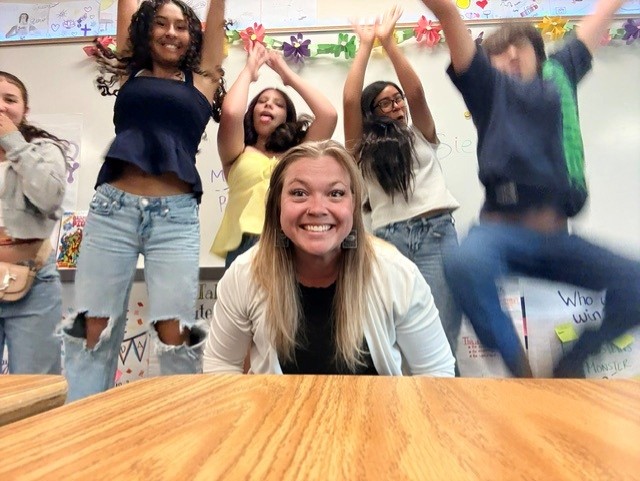
Looking toward the future is another key component of the curriculum. Students research careers that interest them, explore the realities of cost of living and financial planning, and develop presentations around their aspirations. Their work culminates in projects that are shared with school and district leaders, including the principal and superintendent, providing students with an opportunity to showcase their goals and accomplishments.
Measuring Success
Program Snapshot
- Started as a pilot cohort of 7 students
- Expanded to 14 students
- District-approved course offering middle school credit
- Focused on students experiencing attendance challenges
- Incorporates goal setting, journaling, academic support, career exploration, and community engagement
Early Outcomes
- 75% of students improved attendance over the course of the program
- 100% of students earned course credit
- 100% of students reported an increased sense of belonging or school connection
- 90% showed progress on academic and attendance goals
- 71% of students met their goal to improve social-emotional learning
For Helen, success is measured not only in improved attendance rates, but in the confidence students develop and the possibilities they begin to see for themselves. Another student, Gino, improved his attendance from 65% to 80% after enrolling mid-year. Students like Genoveva and Yami set concrete goals around reducing tardies — and both not only met but exceeded them.
Through ongoing professional development, including Youth Mental Health First Aid training, Motivational Interviewing, BECCA training, and participation in the Better Together Conference, Helen continues to strengthen her ability to meet students where they are and provide meaningful support.
As the program continues to evolve, Helen is exploring opportunities to further formalize the curriculum and create a pathway that could be replicated in other schools. The vision is clear: ensuring every student receives the support they need to reconnect with school, discover their potential, and build a foundation for long-term success.
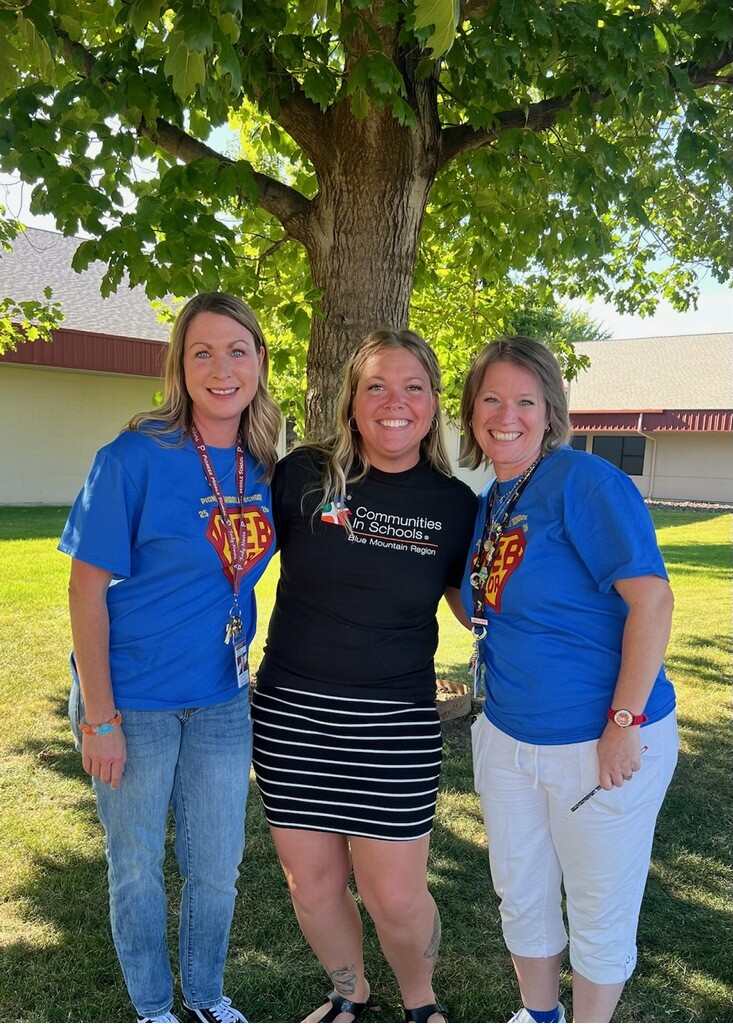
“This class, when paired with additional tier one interventions, has contributed to Pioneer Middle School reducing their chronic absenteeism by 3.5% this year. As the district has seen the success of this course and its positive impact on the school, there is interest in expanding this program to the other middle school and high schools. We hope to pursue this expansion in the coming year.” – Katie DePonty, Executive Director of Communities In Schools of the Blue Mountain Region
Programs like Helen’s demonstrate what is possible when schools and communities work together to meet students where they are. By creating a space where students feel supported, connected, and empowered, Pioneer Middle School is helping young people build habits and confidence that will extend far beyond the classroom.